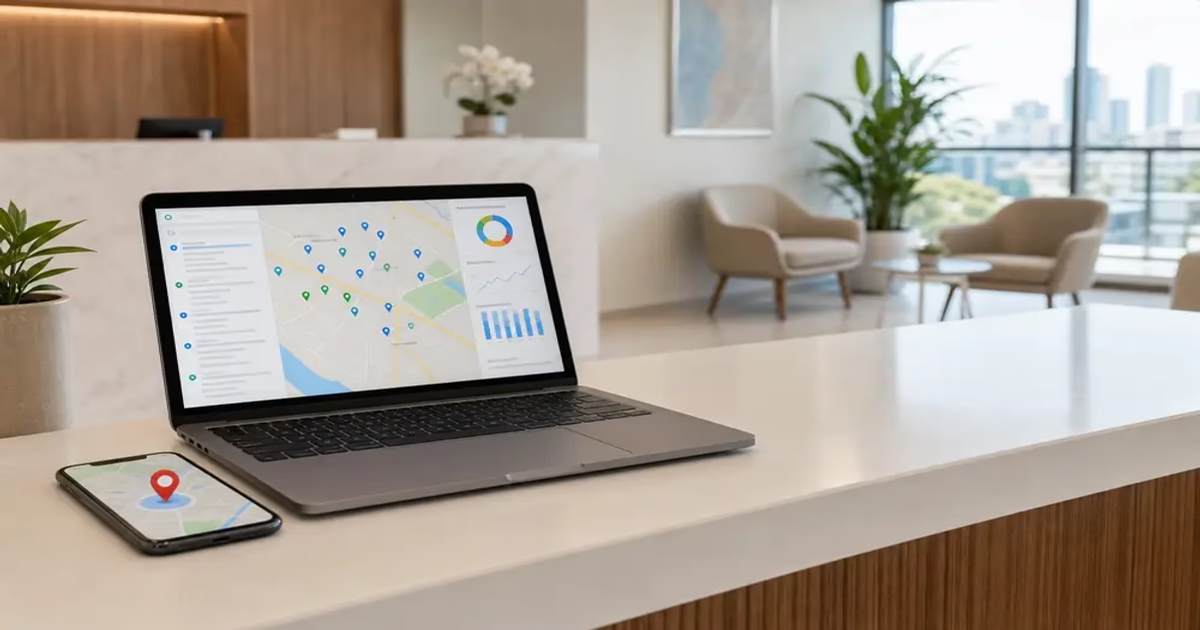
Google Business Profile is one of the most important assets in local SEO. It helps businesses appear on Google Maps, in local panels and in search results when people look for a product or service nearby.
For the English version of this article, the local example is New York City. The U.S. Census Bureau QuickFacts reports an estimated population of 8,584,629 people for New York City on July 1, 2025. In a market of that size, local visibility is not optional. Businesses need to be found when customers compare options, check reviews and decide who to contact.
What is Google Business Profile?
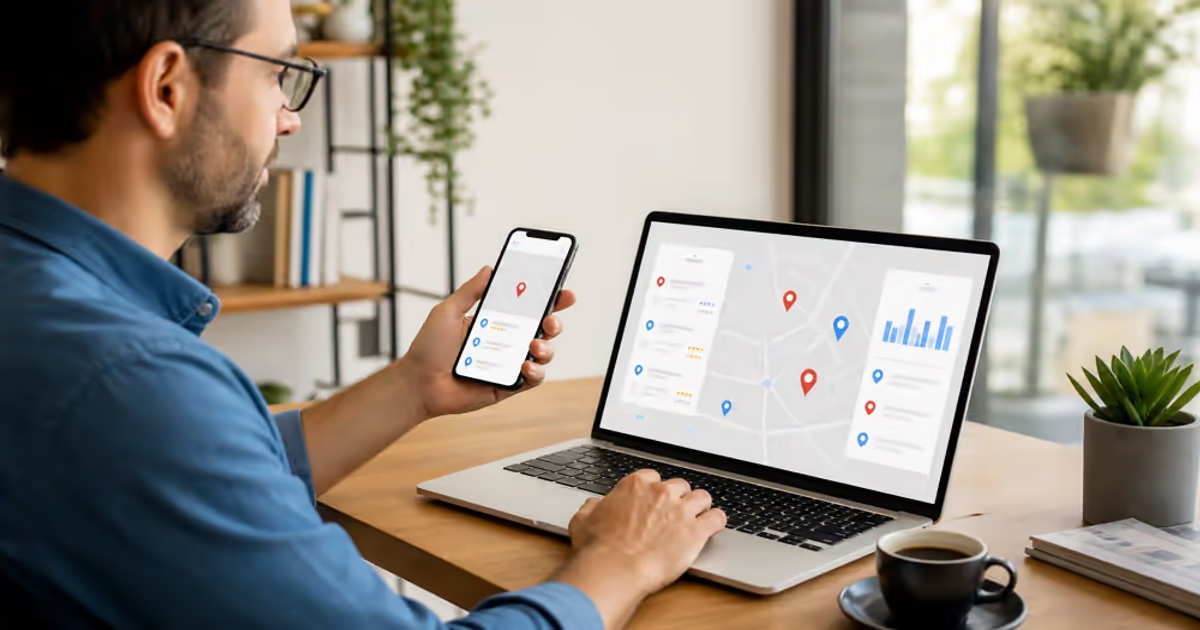
Google Business Profile is the current name for what many people still call Google My Business. Google’s official Business Profile page says businesses can control how their free profile appears on Google Search and Maps, add photos, manage reviews and share what makes the business unique.
A profile can show your business name, category, address or service area, phone number, website, opening hours, photos, services, products, reviews, questions, answers and directions. For the customer, it is a trust snapshot. For the business, it is a local acquisition channel.
Why it matters for local SEO
Local SEO is about being visible when someone searches with local intent. Searches such as “SEO agency in New York”, “accountant near me” or “best restaurant in Brooklyn” are not purely informational. They often lead to calls, route requests, website visits and quote requests.
The profile matters because it concentrates decision signals: opening hours, contact details, photos, reviews, services and proximity. If those elements are incomplete or inconsistent, users may skip the business before visiting the website.
How Google ranks local results
Google explains that local results are mainly based on relevance, distance and prominence. Together, these factors help Google match a business to a customer’s search.
Relevance
Relevance is how well the profile matches the search. Categories, services, description, website content and reviews should make it clear what the business does.
Distance
Distance reflects how far the business is from the user or the area mentioned in the query. Being close helps, but it does not replace accuracy, trust and a strong profile.
Prominence
Prominence reflects how well known and trusted the business appears. Reviews, links, mentions, articles, directories and the business website can all contribute to that perception.
How to optimize your Google Business Profile
Use the real business name
Use the actual name of the business. Adding keyword stuffing to the name may create risk and reduce trust.
Choose the right primary category
The primary category should describe the core business. Secondary categories can support related services, but they should be real and relevant.
Keep contact information accurate
Google’s documentation on editing a Business Profile explains that verified profiles can update address, hours, contact details and photos. That information should match the website and other public profiles.
Add services and products clearly
Service pages help users understand whether the business solves their problem. A local agency may list SEO consulting, local SEO, technical SEO, website development, content strategy and GEO.
Use real photos
Photos help users recognize the business and evaluate trust. Use real images of the team, office, products, work process or client-facing environment.
Build real reviews
Reviews are powerful, but they must be earned. Ask real customers for honest reviews after real work. Do not buy reviews or incentivize fake ratings.
Connect the profile to a strong website
Google Search Central explains how businesses can make location, official site and content information available for Search, knowledge panels and Maps. The website should reinforce services, location, credibility and conversion paths.
Quick checklist
- verified profile;
- accurate primary category;
- consistent phone, address, website and hours;
- clear service list;
- real and recent photos;
- ethical review process;
- responses to reviews;
- website pages for services and contact;
- local content connected to search intent.
Common mistakes
The most common mistakes are incomplete profiles, wrong categories, outdated hours, generic descriptions, stock photos, unanswered reviews and inconsistent business details across the web.
Google Maps, website and local SEO: what does each asset do?
A Business Profile works best when it is connected to service pages, local content, reviews and consistent business data. The table below summarizes the role of each asset.
| Asset | Role in local search | What to optimize first |
|---|---|---|
| Google Business Profile | Visibility in Maps, local panels, calls, directions and reviews. | Category, services, opening hours, photos, reviews and responses. |
| Business website | Explains services, authority, proof and conversion paths. | Service pages, useful content, contact details, speed and structured data. |
| Local SEO | Connects search intent, location and trust across channels. | NAP consistency, internal links, local pages and reputation. |
| Supporting content | Answers questions before contact and builds topical authority. | Guides, FAQs, allowed case studies, comparisons and checklists. |
On mobile, swipe the table sideways to see all columns.
How should you prioritize optimization work?
Not every improvement has the same impact. If the phone number is wrong, new photos will not solve the problem. If the category is too broad, strong reviews may still attract the wrong searches. If the website does not explain the services, the profile may generate clicks without enough trust.
- Fix critical data: name, phone, address, service area, website and hours.
- Refine category and services: make the offer specific.
- Add visual proof: real and recent photos.
- Build a review process: request, respond and monitor ethically.
- Connect the website: service pages, FAQ, CTAs and internal links.
- Monitor signals: calls, directions, clicks, queries and lead quality.
Conclusion
Google Business Profile is central to local SEO because it connects search intent, Maps, reviews and customer action. It does not replace a website, but it can drive qualified local demand when it is accurate, complete and connected to a strong SEO strategy.
If your company wants to improve local visibility in Search and Maps, LondrinaSEO can audit your profile, your website and your local SEO signals.
Frequently Asked Questions
Is Google My Business still available?
The old name is still widely used, but the product is now called Google Business Profile.
Does a Business Profile guarantee first place on Maps?
No. Local ranking depends mainly on relevance, distance and prominence, plus information quality and trust signals.
Which field matters most in a Business Profile?
There is no single field. Primary category, services, location or service area, reviews, photos and website consistency work together.
How many reviews does a local business need?
There is no universal number. Real, recent and specific reviews are more useful than an artificial volume target.
Can the website influence Google Maps visibility?
Yes. The website helps users and Google understand services, location, authority, content and contact paths.
How do you know the optimization worked?
Track calls, website clicks, directions, messages, search queries and the quality of leads generated after the changes.